Resident Physician Integris Baptist Medical Center Oklahoma City, Oklahoma, United States
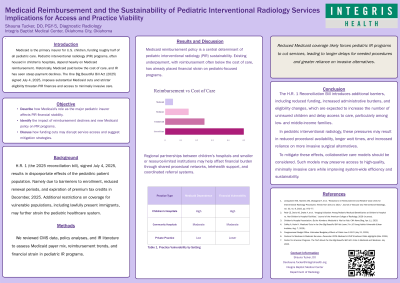
Purpose: Pediatric interventional radiology (PIR) provides essential minimally invasive care for medically complex children but remains financially vulnerable due to disproportionate reliance on Medicaid reimbursement. Ongoing and proposed reductions in Medicaid funding raise concerns regarding the sustainability of PIR programs and downstream impacts on access to specialized pediatric care. This study evaluates the financial and structural risks posed by Medicaid reimbursement policies to PIR services.
Methods/Materials: Publicly available national data from the Centers for Medicare and Medicaid Services, children’s hospital financial reports, and professional society analyses were reviewed to characterize payer mix, reimbursement patterns, and operating margins for pediatric interventional radiology services. These data were used to model the relative contribution of Medicaid reimbursement to PIR practice viability and to assess the potential effects of further reimbursement reductions on service availability.
Results: Pediatric interventional radiology practices were found to rely disproportionately on Medicaid compared with adult interventional radiology and other procedural specialties. Current Medicaid reimbursement rates frequently fall below the cost of care delivery, leaving limited financial margin to absorb additional cuts. Modeling suggests that further reductions would increase the risk of service contraction or program closure, particularly in safety-net and children’s hospitals, with resulting delays or loss of access to minimally invasive procedures for pediatric patients.
Conclusions: Medicaid reimbursement policy is a critical determinant of pediatric interventional radiology sustainability. Continued reductions threaten both the financial viability of PIR programs and equitable access to specialized pediatric care. These findings underscore the need for targeted advocacy and reimbursement reform to preserve essential pediatric interventional services.